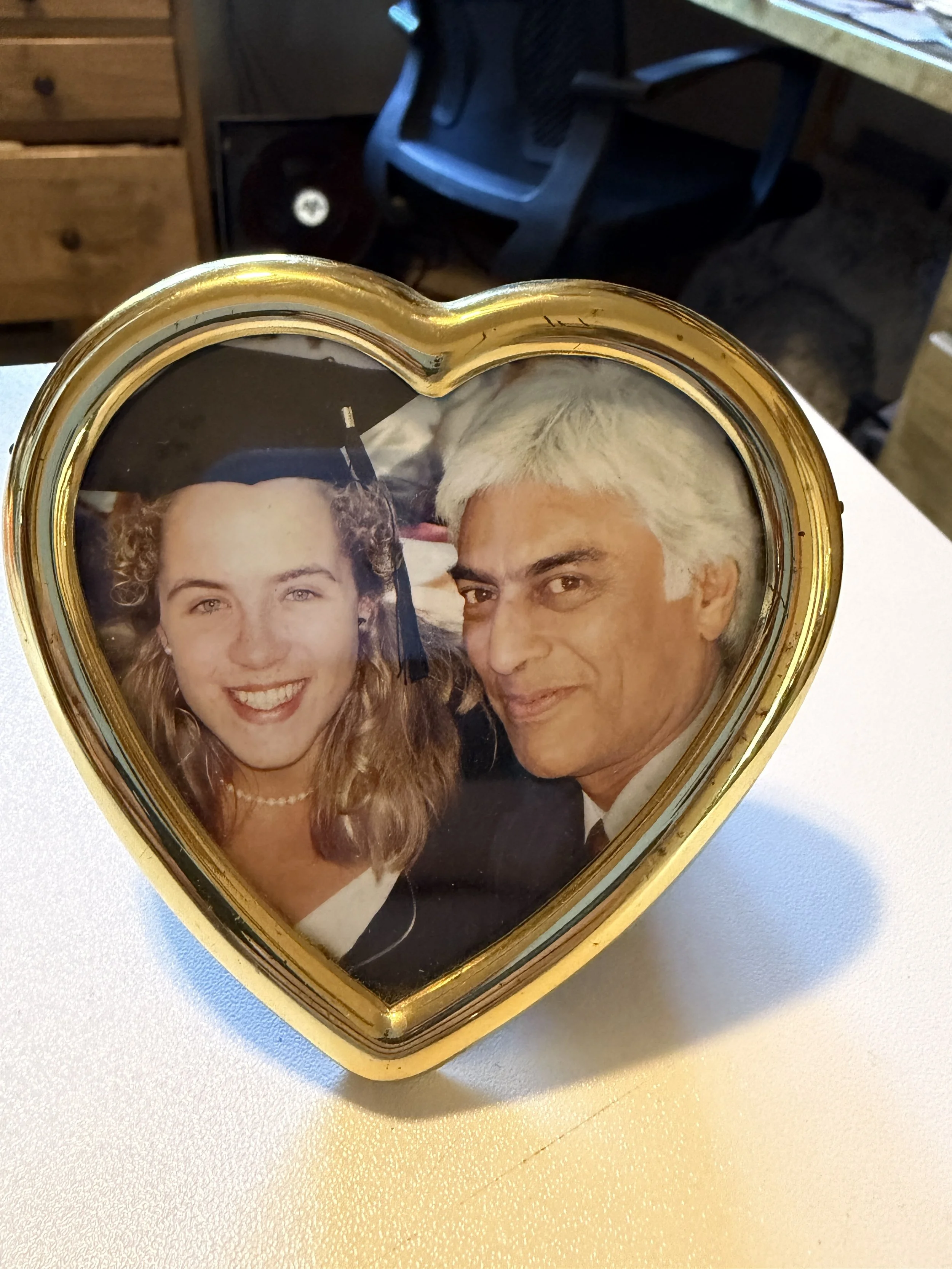
It was 1989. 11 million gallons of crude oil had just spilled into Prince William Sound.
A group of execs and scientists called my godfather, Amarit Chopra, in a panic. They knew the brilliant work of which he was capable, and they needed his help.
He spent the next three days with them trying to find effective solutions to this catastrophe. They had been mulling over ideas for a few hours, and nothing very noteworthy had emerged.
“Jit,” the name everyone knows my godfather by, finally said, “Someone give me a crazy idea – absolutely crazy.” 10 seconds of silence. 20. Finally someone said, “We could throw 10,000 sea otters in the ocean and have their fur absorb all the oil.” Ha ha ha. Wait! Ha-has lead to A-has!
Jit asked them what they liked about the idea. Their fur absorbs oil. Otters can swim far and they come back to shore. They can swim on and underneath the surface. You can increase the numbers of otters you use. They can get into little nooks and crannies in the rocks that are typically hard to reach with mechanical equipment.
He asked what they didn’t like about the idea. Duh.
Here’s the turning point. Jit asked, “How could you achieve the positives without actually using sea otters?” The eight scientists started inventing a concept of building missile-shaped drones, covered in absorbent material, remotely controlled from a ship in the middle of the ocean, or perhaps a helicopter.
Over the course of the next three days, that group of scientists came up with seven or eight patent ideas. And the unbelievable part? They wanted to put all of their names on all the patents. It’s more common for one person to claim a patent. But the process was so collaborative, they couldn’t tell whose idea it was. It was everyone’s.
If you’re stuck trying to solve a problem with your team, try out a crazy idea. But rather than dismissing it as crazy, extract what’s good about it. Find the problems with it. Then ask yourselves, “How can we achieve most of the benefits of this idea while eliminating the greatest problem?”
Jit personally trained me a few years ago in the methodology he employed with Fortune 500 companies around the world for 30 years. He’s 88 years old now. I call him before and after every innovation engagement I take on to both prepare and debrief, perfecting my skills each time. It’s an incredible honor to be his pupil.